
Noida International Airport Breaks New Ground in Eco-Friendly Construction by Incorporating Limestone Calcined Clay Cement into India’s First Large-Scale Sustainable Infrastructure Project
Published on
September 26, 2025

Noida International Airport (NIA), a subsidiary of Zurich Airport International AG, has taken a bold step toward sustainable infrastructure in India by becoming the country’s first large-scale project to incorporate Limestone Calcined Clay Cement (LC3) into its construction. This move signifies a groundbreaking shift in the building materials industry, making NIA a trailblazer in adopting lower-carbon alternatives. The adoption of LC3 positions Noida International Airport as a crucial milestone in India’s journey towards greener, more energy-efficient infrastructure development.
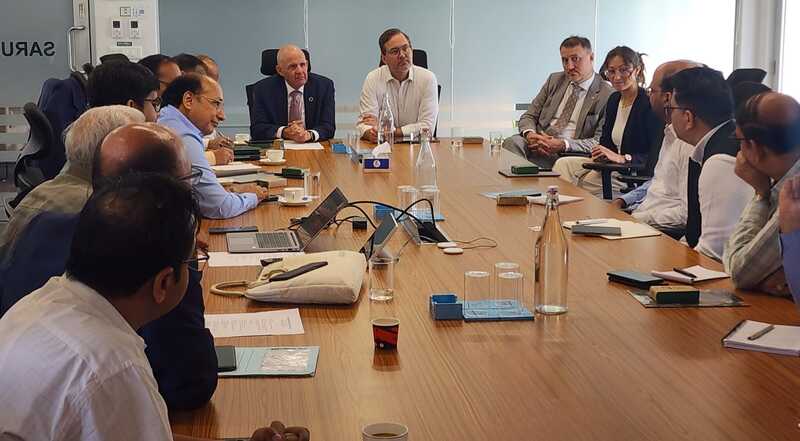
This achievement was officially recognized at a ceremony held at the airport site, which was attended by high-ranking officials, including leaders from the Embassy of Switzerland in India and prominent representatives from India’s cement industry. Their presence underscored a shared commitment to environmental sustainability and the crucial role that the construction sector plays in addressing the climate crisis. The collaboration between Indian industry leaders and international experts demonstrates the potential of cross-border partnerships to advance sustainable practices in major infrastructure projects.
The Revolution of Limestone Calcined Clay Cement (LC3)
Limestone Calcined Clay Cement (LC3) is a revolutionary, low-carbon alternative to conventional Portland cement, which is notorious for its high carbon footprint. Developed through an extensive decade-long international collaboration (2013–2023), LC3 is the product of concerted efforts from several esteemed institutions and organizations, including the Indian Institutes of Technology (IIT) Delhi and IIT Madras, the Swiss Development Cooperation (SDC), the École Polytechnique Fédérale de Lausanne (EPFL) in Switzerland, Technology and Action for Rural Advancement (TARA), and Universidad de las Villas (UCLV) in Cuba. The goal of this collaboration was to find an eco-friendly solution that would not only reduce the carbon footprint of cement production but also be economically viable.
Nicolas Schenk, Chief Development Officer at Noida International Airport, stated, “At Noida International Airport, we are committed to building a world-class facility with sustainability at its core. We are proud to be the first large-scale project in India to build with LC3. Our use of this innovative cement showcases how major infrastructure projects can lead the change and set a new standard for the future of construction in the country.”
Key Benefits of LC3
- Lower Carbon Footprint: One of the most significant advantages of LC3 is its ability to reduce CO2 emissions by up to 40% when compared to conventional Portland cement. Cement production is one of the largest contributors to global carbon emissions, and this reduction is crucial in the fight against climate change. By using LC3, NIA is leading the way in adopting building materials that align with global environmental goals.
- Cost-Effectiveness: LC3 is approximately 25% more cost-effective to produce than traditional cement. This makes it an attractive option not only from an environmental perspective but also from a financial standpoint. For large-scale infrastructure projects like NIA, using LC3 can result in significant savings, ultimately contributing to the cost-effectiveness of the entire project.
- Resource Efficiency: LC3 is made from a combination of limestone and clays, materials that are abundant and low-grade. This reduces the need for high-quality raw materials and supports sustainable resource use. The availability of these materials ensures that LC3 can be produced locally, further lowering transportation costs and carbon emissions associated with material procurement.
- Energy Efficiency: Producing LC3 requires a lower calcination temperature of 800°C, compared to the 1450°C required for conventional Portland cement. This reduction in temperature leads to significant energy savings, making the production of LC3 more efficient and reducing the overall energy consumption of cement manufacturing.
- Superior Performance: Despite its lower carbon footprint, LC3 does not compromise on the strength or durability of the final product. It has been shown to offer properties that are comparable to or even superior to traditional cement. This makes LC3 a reliable choice for high-performance infrastructure projects like airports, where safety and longevity are paramount.
The Role of India’s Cement Industry in Promoting LC3
The adoption of LC3 at Noida International Airport marks a significant achievement, but it is part of a broader movement in India’s cement industry toward more sustainable practices. Several leading Indian cement manufacturers, including JK Cement, JK Lakshmi Cement, UltraTech Cement, Dalmia Bharat Cement, and Shree Cements, have already announced commercial production of LC3. These companies are not only paving the way for cleaner, more sustainable cement production but are also helping India to become a global leader in the use of low-carbon building materials.
India is the world’s second-largest cement market, and the country’s construction industry plays a crucial role in its economic growth. By adopting LC3 on a large scale, India is positioning itself at the forefront of a global movement toward cleaner, more responsible construction. This is especially significant in a country where infrastructure development is booming, and the environmental impact of building materials is a growing concern.
Philippe Sas, Head of International Cooperation, Embassy of Switzerland in India and Bhutan highlighted, “As part of the Swiss-Indian environmental collaboration, the development of LC3 stands as a landmark achievement for the cooperation between scientists and experts from Switzerland, India and Cuba. LC3 represents a breakthrough within the construction sector with a high impact. It paves the way for its commercial production and large-scale use in India and other regions globally. The Embassy of Switzerland in India remains firmly committed to advancing sustainability and resilience in India, with a particular focus on the sustainable building and construction sector.”
Implications for Sustainable Infrastructure in India
Noida International Airport’s adoption of LC3 serves as an inspiring example for other infrastructure projects in India and beyond. The successful incorporation of this low-carbon cement not only contributes to reducing the environmental impact of the construction industry but also demonstrates the viability of sustainable practices in large-scale projects. This initiative is a testament to the growing commitment within India’s private sector to embrace green technologies and reduce the carbon footprint of major infrastructure projects.
As climate change continues to be a pressing global issue, the construction industry must take responsibility for its environmental impact. Noida International Airport’s decision to use LC3 is a pivotal step toward a more sustainable future. By incorporating innovative, environmentally friendly materials into its development, NIA is leading the way in showing how large infrastructure projects can be developed without sacrificing environmental integrity.
Noida International Airport’s adoption of Limestone Calcined Clay Cement (LC3) marks a monumental moment in India’s sustainable infrastructure journey. By integrating this low-carbon building material, the airport is not only reducing its environmental footprint but also setting an example for future infrastructure projects across the country and the world. With the support of leading cement manufacturers and continued collaboration with international experts, India is well on its way to becoming a global leader in sustainable construction. Through such initiatives, the construction industry can contribute significantly to a greener, more sustainable future.


Related Posts

Uganda: Abercrombie & Kent Now Reopens Redesigned Gorilla Forest Lodge in Bwindi Impenetrable Forest
United Airlines Prepares to Launch Its First Starlink-Equipped Mainline Flight with FAA Certification, Offering Free High-Speed Wi-Fi for MileagePlus Members Starting October 15